When presales fall short, a residual stock loan could be the answer


Written by David Lovato – CPC Development Lending Solutions

June 2026

Many developers started projects in 2025 expecting sales to catch up during construction. Instead, some are approaching completion with fewer presales than anticipated and a construction loan that still needs to be repaid. 

If this sounds familiar, a residual stock loan could be an option for you. 

Why have presales slowed?

The off-the-plan market is under pressure from several directions at once. The Reserve Bank of Australia (RBA) has raised the cash rate three times in 2026, taking it to 4.35%, undoing all three of the cuts delivered in 2025. Reduced borrowing capacity means fewer buyers can qualify for finance at the prices developers need to achieve, shrinking the pool of potential purchasers considerably.  

Buyer sentiment has been affected by uncertainty around interest rates, the cost of living and the Federal Budget’s negative gearing and capital gains tax (CGT) changes. While the reforms aren’t yet official – and even if they do become so, they won’t take effect until 1 July 2027 – some prospective investors are taking a cautious approach while they assess the implications for their own position. According to the latest Westpac-Melbourne Institute Consumer Sentiment Index, the “time to buy a dwelling” index dropped 13% in June 2026 compared to the same time in 2025. 

Longer build timeframes add another layer of hesitancy. A new report from the Committee for Economic Development of Australia (CEDA), produced in partnership with Urbis, found that build times have increased by 40% since the pandemic, and construction costs have surged by 88% over the last 10 years. As a result, buyers who commit to off-the-plan are locking in a purchase price for a property they may not settle for a year or more, in a market where the outlook has become harder to read. 

There is also a dynamic specific to developers themselves. Many could generate more sales by discounting, but doing so risks resetting the price benchmark for the entire project. Some are consciously choosing to protect value rather than chase volume – a sound strategy, but one that slows sales in the short term. The result for projects completing right now is fewer locked-in sales than anticipated and, in some cases, presale numbers that fall short of what is needed to repay the construction lender. 

What is a residual stock loan? 

A residual stock loan is designed specifically for this situation. It allows a developer to refinance out of their construction loan at or near practical completion, replacing it with a new facility secured against the unsold dwellings. 

Rather than being forced to discount to generate quick sales and meet a construction loan maturity date, the developer transitions to a lender whose facility is structured around a sell-down period. This gives your sales team time to properly nurture qualified buyers through the decision-making process, hold prices at the levels the project’s feasibility requires and avoid the pressure to discount that comes when a construction loan maturity is bearing down.  

The key benefits of a residual stock loan 

The most immediate benefit is time. A residual stock facility extends your timeline, removing the pressure of a looming construction loan maturity while your sales campaign is still gaining traction. 

It can also reduce holding costs. Residual stock facilities are typically structured differently from construction loans, and refinancing at the right time can lower the cost of carrying unsold stock through to settlement. 

There is also the potential for early equity release. Some residual stock lenders will agree to a split of sale proceeds as individual settlements occur, meaning you can begin recovering equity from completed sales rather than waiting until the entire facility is repaid. For developers with capital committed across multiple projects, this can help with cash flow. 

What to consider before choosing a residual stock loan

Residual stock facilities are not without trade-offs. Interest rates are typically lower than a construction loan as there is no line fee or progressive drawdown, so there is less ongoing admin for the lenders. The loan will have a fixed repayment date but no minimum term, so you don’t get penalised if you repay the loan early.

Lenders will also assess the quality and location of the unsold stock, the strength of the sales pipeline and, often, the experience of the appointed sales agent before agreeing to terms. A project with limited buyer interest or in a softening market may find residual stock options harder to access, or available only on less favourable terms. 

It is also worth noting that a residual stock loan is a bridge, not a solution in itself. If the underlying demand for the project is genuinely weak, extending the sell-down period will delay rather than resolve the problem. The facility works well when the issue is timing and market conditions, not fundamental project viability. 

Timing matters

Many developers wait until practical completion to investigate residual stock finance, but by then, your options could be more limited. As soon as it becomes clear that sales are tracking below expectations, you should consider engaging a specialised development finance broker about your options. 

Starting the conversation early gives you more flexibility, more lender options and more time to structure an orderly transition out of the construction facility if required. 

At CPC Lending Solutions, we help developers assess residual stock options before settlement pressure builds, giving you more time to achieve the right sales outcomes rather than being forced into decisions by looming loan deadlines. To find out more about how CPC approaches development finance, download the CPC Lending Solutions Development Lending Guide

If you would like to discuss your specific situation, contact David Lovato at dlovato@crowdpropertycapital.com.au or submit an enquiry.

How the Federal Budget reshapes development finance


Written by David Lovato – CPC Development Lending Solutions

May 2026

The 2026-27 Federal Budget has fundamentally shifted the landscape for property development finance in Australia. And when you combine what was outlined in the Budget with APRA’s proposed capital reforms announced in March, the picture that emerges could be one of the most significant resets in development lending conditions in years. 

New builds win under the new tax rules 

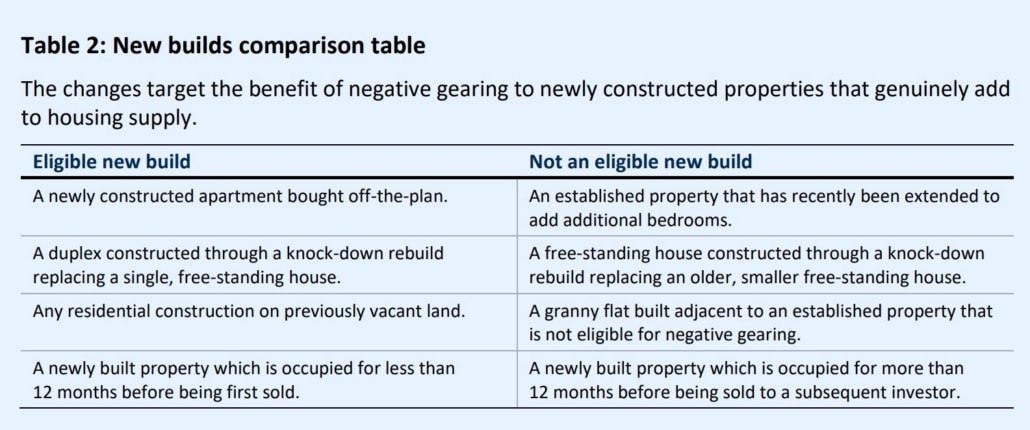
The centrepiece housing tax reform in the Budget is the restriction of negative gearing to new residential properties from 1 July 2027, combined with a major overhaul of the capital gains tax (CGT) discount. 

From July 2027, investors who buy established properties will lose access to negative gearing against their wages and other income. And the 50% CGT discount will be replaced with an inflation-indexed system with a 30% minimum tax. 

New builds are explicitly exempt. Investors who buy newly constructed dwellings will retain full negative gearing and can choose between the existing 50% CGT discount or the new indexation system when they sell. 

Practically, this means that from 1 July 2027, the established property market and the new build market will operate under two entirely different tax regimes, and new builds win on almost every measure. 

Treasury modelling estimates the reforms will support around 75,000 additional owner-occupiers over the next decade. But the less-discussed consequence is the wave of investor demand that will shift towards newly constructed dwellings. 

For property developers, this could be the start of a new wave of demand. 

APRA could remove the final barrier 

Here is where it gets interesting for development finance specifically: Banks make money on long-term residential investment loans. If investor demand is shifting structurally towards new builds, banks have a strong commercial incentive to fund the short-term development loans that produce the stock those investors will buy. One feeds the other. 

But there is a problem. Under existing capital rules, development loans attract some of the highest reserve requirements of any loan type, making them expensive for banks to hold and, for many lenders, not worth the trouble. This is precisely why banks have been retreating from development lending for years, leaving developers increasingly reliant on non-bank lenders at higher rates. 

In March, Australia’s banking regulator, APRA, proposed reforms that directly address this. The regulator has proposed adjusting the capital rules for land acquisition, development and construction loans, allowing well-credentialed projects to qualify for lower reserve requirements. The explicit goal is to give banks more capacity and more commercial incentive to lend to residential developers. 

Put it together and the picture is clear. The Budget has created a structural demand shift towards new residential supply. APRA has proposed rules that make it cheaper for banks to fund that supply. And for the major banks, there is an additional commercial reality at play: as investor demand moves away from established stock, the long-term residential investment loans that banks rely on will increasingly be tied to new builds. To maintain that loan book, banks need new supply, which means funding the short-term development loans that produce it. 

It is, in effect, a double incentive. 

And as a result, development lending is about to look considerably more attractive to the major banks than it has in years. 

What this means for developers right now 

There are some timing considerations. APRA’s reforms are still proposals. Consultation is underway and implementation will be phased. The Budget changes don’t take effect until 1 July 2027, so the market will take time to adjust. 

But the developers who move early – who get projects into the ground, through the approvals process and ready to sell into a market where new builds carry a significant tax advantage over established stock – could be well-positioned to benefit. 

That means getting your finance strategy right now, not in 2027. 

At CPC Lending Solutions, we work closely with developers to match projects to the right lenders at the right time. The lending landscape is shifting, and knowing which lenders are already moving to increase their development appetite is knowledge that can help you secure the right finance. 

To find out more about how CPC approaches development finance, read our CPC Lending Solutions Development Lending Guide. To discuss your next project, contact us at dlovato@crowdpropertycapital.com.au or submit an enquiry.

Lender in focus: Goodland Capital

Written by David Lovato – CPC Lending Solutions

September 2025

In property development, finding a lender who truly understands your perspective can transform the entire project experience. While many lenders focus purely on numbers and rigid criteria, others take a more empathetic approach that puts the developer’s needs at the centre of every decision.

In the latest instalment of our “Lender in focus” series, we’re profiling Goodland Capital, a boutique lender with a clear niche in small-scale property developments.

What sets Goodland Capital apart?

Goodland Capital’s key differentiator is its empathetic, developer-first approach. Unlike larger institutions that typically apply one-size-fits-all solutions, Goodland Capital takes the time to understand not just what you’re building, but why you’re building it – and what obstacles you might face along the way.

This problem-solving mindset means they’re not just a lender, but a partner who understands the realities of development projects.

A focus on smaller developments

Goodland Capital specialises in smaller-scale projects, including land subdivisions, duplex constructions and single-house builds, with particular expertise in projects that are midway through construction. They do not finance large apartment complexes or major development projects, but their targeted focus means they have deep expertise in this space.

By concentrating on smaller developments, they’ve built an in-depth understanding of exactly what these projects need to succeed. This means you benefit from a lender who truly understands the requirements and risks of smaller, high-potential projects.

Unique policies that matter to developers

Goodland Capital offers several features designed specifically for property developers. 

First, their early involvement in due diligence is especially valuable. This allows them to participate in preliminary assessment phases and use their broad market knowledge to identify potential issues before they become costly problems.

Second, they provide a high degree of funding certainty. Once Goodland Capital commits to a project, you can count on them to deliver. This matters most for developers and provides peace of mind throughout the development process.

Finally, Goodland Capital prioritises a personalised problem-solving approach. This means that rather than just providing capital, they also work closely with developers to find practical solutions to challenges as they arise.

Why developers choose Goodland Capital

There are several reasons why property developers value working with Goodland Capital:

  1. Genuine partnership approach: The team thinks like developers, offering practical guidance and support rather than creating obstacles.
  2. Funding certainty: Reliable and consistent finance allows developers to plan and proceed with confidence.
  3. Specialised focus: Concentrating on smaller developments means they have in-depth knowledge and expertise in this sector.
  4. Responsive and personal service: As a boutique lender, developers have direct access to decision-makers. This means you get quick, personalised responses to queries.

The right fit for the right developer

Goodland Capital is an ideal partner for developers who value more than just access to funds. Their empathy-driven approach, deep understanding of smaller-scale projects and reliable funding make them a standout in the development finance market.

Of course, every developer’s needs are different, and what works perfectly for one project may not suit another. That’s where CPC Development Lending Solutions comes in. We work with a broad range of lenders to match each client with the right financing solution for their specific project. Whether you’re just starting a new subdivision or looking to finish a partially completed build, we are here to help you find the right financial partner.

Contact us at info@crowdpropertycapital.com.au or fill in this form to find out more. 

CPC Lending Solutions expands to meet growing demand

Written by David Lovato – CPC Lending Solutions

August 2024

We are excited to announce some significant changes at CPC Lending Solutions. To better serve our clients and meet the increasing demand for our services, we’re expanding our team and adding a new focus area.

Residential lending in 2024

As we head into the latter half of the year, the residential lending market presents buyers with unique opportunities. While interest rates have been held steady for several months, the overall cost of living remains elevated, putting pressure on borrowers’ budgets.

Despite these challenges, the housing market continues to demonstrate resilience. Strong population growth, coupled with a shortage of supply in many areas, is driving demand for residential properties. This has led to increased competition among buyers and put upward pressure on home prices.

However, many borrowers are finding it difficult to access finance, whether for new or existing homes, due to high interest rates. 

These affordability challenges are also impacting developers. Reported presales during the pre-construction and construction stages of projects are at a high risk of defaults and delays at settlement, or not even settling at all.

That’s why we’ve identified a need for a broker focused on the off-the-plan residential market.  

What’s changing?

As part of our expansion, we’re rebranding to CPC Lending Solutions and welcoming Andrew Wallace, our new Residential Mortgage Specialist. Andrew brings with him a proven track record and a deep understanding of the residential market.

His primary focus will be managing all residential finance enquiries and providing tailored solutions for individuals and families looking for residential mortgages.

At CPC Lending Solutions we offer a wide range of residential mortgage solutions including refinancing, off-the-plan new sales, house and unit purchases and investment property loans.

We’re also addressing a real problem that exists for construction-stage lenders and developers: the settlement risk of off-the-plan pre-sales. Many of these pre-sales are at risk when it comes time to settle due to outdated pre-approvals, changes in buyers’ life circumstances or rising interest rates.

CPC Lending Solutions will assist developers and purchasers in the off-the-plan sales process. We will work with developers to streamline the finance process for purchasers. 

Combining our in-depth knowledge of development with a new focus on residential buyers, we can connect with your off-the-plan buyers to build rapport and assist them in their homeownership journey.

This allows us to identify any risks, secure them a residential loan and ensure they don’t default when given their notice to settle. 

By identifying and mitigating risks associated with pre-sales, we can help developers increase their chances of successful project completion.

Increased competition

As a buyer, not only will you face increased competition for your new property thanks to the current shortage of homes, but you’ll also find many lenders are vying for your business. This competition can work to your advantage, as lenders are more includes to offer attractive terms to secure your loan. But, navigating this process requires time and knowledge.

That’s why we’ve brought Andrew on board, to ensure you benefit from this competitive environment. We offer personalised advice and a good relationship with lenders that we can use to benefit you.

Why choose CPC Lending Solutions?

At CPC Lending Solutions we are in a unique position to offer both residential finance to buyers as well as continue our high-quality finance broking service for developers.

Our new focus on assisting developers with off-the-plan sales is a natural extension of our existing services. We will work closely with you and your buyers for off-the-plan sales. This will allow purchasers to access finance to buy your new builds. With our experience in this field, we can tailor solutions for buyers, including options like deposit bonds, so that buyers secure a property in a competitive market.

For buyers looking for finance for residential property, we have a dedicated team member with in-depth knowledge of the current property and lending environment. He will be able to offer advice, facilitate your application and guide you through the home purchasing process.

Our services are free to borrowers and our brokerage fees are fully disclosed within the loan documentation.

Learn more about our residential mortgage solutions here.

CPC Lending Solutions is a property development and residential finance specialist. Whether you’re a developer needing funding for land, construction, or residual stock, or a buyer looking for the perfect mortgage, we’re here to help. Contact us at info@crowdpropertycapital.com.au or fill in this form

How Australia’s new unfair contract regulations help protect small developers


Written by David Lovato – CPC Development Lending Solutions

December 2023


Effective from 9 November 2023, the Australian Consumer Law has been updated to prohibit unfair terms in standard-form contracts. Thanks to these changes, small business owners, including property developers, will be better protected against predatory lending practices. 

Understanding the changes

An unfair term is one that:

  • Creates a significant imbalance in the parties’ rights and obligations.
  • Is not necessary to protect the legitimate interests of the party advantaged by the term.
  • Would cause detriment (financial or otherwise) to a small business if it were to be applied or relied upon.

In the context of property development financing, this means that small developers will be shielded from terms that could, for instance, impose excessive interest rates or default charges that are disproportionate to the lender’s actual costs.

Previously, the courts could declare such terms void but could not penalise lenders for including them in contracts. 

However, under the new changes, businesses could face penalties up to the greater of:

  • $50 million
  • Three times the value of the benefit obtained, or 
  • 30% of the business’s turnover in the relevant period. 

Additionally, individuals, including company directors, could also face penalties of up to $2.5 million. 

This substantial financial disincentive is expected to encourage lenders to review and amend their standard form contracts to ensure compliance​​.

The definition of a small business has also been broadened. 

Any business with fewer than 100 employees or an annual turnover of less than $10 million is afforded these protections, which apply regardless of the contract’s value. This expanded scope means that more small property developers will benefit from the protections against unfair contract terms.

What this means for you

In practice, this means a more level playing field for small developers seeking loans. 

That’s because terms that once might have been buried in the fine print, like unfair interest rates or default charges, could now cost a lender dearly if they’re deemed to be taking advantage of a small business’ lack of bargaining power.

As a result, you can now have greater confidence when entering into loan agreements. Lenders will likely be more cautious and fair in their dealings, knowing that the cost of including unfair terms can be prohibitively high.

Tips for small developers

While these changes offer a new level of protection, it’s still important for you to be vigilant when signing contracts. 

This means:

  • Reviewing contracts carefully: Always take the time to read and understand the terms of any loan agreement. 
  • Seeking legal advice: If you’re unsure about any terms, it’s wise to consult with a legal professional.
  • Understanding your rights: Familiarise yourself with the Australian Consumer Law and the specific changes regarding unfair contract terms.

Finally, a knowledgeable finance broker who specialises in property development finance, such as Crowd Property Capital, can provide invaluable assistance when trying to get your project funded. 

A good broker can help you understand the complexities of loan agreements, guiding you through the terms to ensure they are fair and do not exploit your position as a small developer.

They can also help negotiate better terms and identify the most suitable lenders who adhere to ethical lending practices.

Crowd Property Capital is a property development finance specialist. We help property developers overcome their funding challenges by sourcing loans for land, construction and residual stock. Contact us at info@crowdpropertycapital.com.au or fill in this form. 

How property developers can avoid collaborating with builders on the brink


Written by David Lovato – CPC Development Lending Solutions

August 2023


Recent statistics from ASIC, the financial services regulator, show over 2000 Australian construction companies went into liquidation since mid-2021. That averages out to more than two companies every day. 

And it’s not just fledgling enterprises either, with notable names like Porter Davis Homes Group, Probuild, ABG Group and Condev among the casualties.

Australian Constructors Association (ACA) chief executive Jon Davis said the industry was in deep trouble, with firms entering administration at more than twice the rate of other sectors. 

“Building sector profit margins have fallen from around 3% to below 1% and liquidity has collapsed from 15% to below 5%. Most concerningly, over half of all large builders are now carrying current liabilities in excess of current assets— a technical definition of insolvency,” he said. 

“The building industry is a textbook example of market failure.”

Given this, you might be wondering if there is anything you can do to avoid working with a builder who might go bust during the project. 

Well, while nothing is ever guaranteed, there are steps you can take to minimise risk

1. Do your due diligence

Before signing on any dotted line, conduct a thorough background check on the potential builder. Investigate their trading history, past projects, and any media coverage. A simple online search can reveal a wealth of information, including any red flags or controversies. 

2. Run credit checks 

You can investigate a builder’s payment history with suppliers and subcontractors by getting a report from credit agencies, such as Equifax, illion and Experian. Delayed payments or defaults are often an early warning sign of financial trouble.

3. Talk to previous clients

Nothing beats talking to others who’ve worked with the builder. Ask them candidly about their experience. Were there any delays? How did they handle problems? Would they hire them again? This can give you a real insight into how the builder operates.

4. Avoid lowest-bid temptations

While it can be tempting to choose the cheapest bid, this might mean compromising on quality and reliability. Balance the cost with other factors like experience, reputation, and financial stability.

5. Assess their supply chain strength

 A builder’s financial health isn’t only about their immediate finances. If they’re reliant on a supply chain that’s struggling, it could affect your project. Ask about their suppliers, their payment terms, and any contingencies in place for disruptions.

6. Understand their business model 

A builder’s business model should be sustainable and not overly reliant on one or two large projects or clients. Diversification in projects and clientele often indicates a more resilient business.

7. Don’t pay upfront

To reduce financial risks, set clear milestones for payments rather than large upfront sums. This ensures you’re paying for completed work and provides an incentive for the builder to maintain timelines.

8. Build long-term relationships

Foster long-term relationships with trusted builders. As you collaborate on multiple projects, you’ll get a better sense of their reliability and financial stability. This familiarity can act as a buffer against potential risks.

9. Consult with experts 

Last, but by no means least, engage with professionals who have their finger on the pulse. As a broker specialising in developer loans, Crowd Property Capital can offer you valuable advice on financial risk management.

CPC Development Lending Solutions can help you get your next project funded. To confidentially discuss your options, contact David Lovato on +61 434 932 634 or info@crowdpropertycapital.com.au.


Fast-tracked planning approval pathways in NSW


Written by David Lovato – CPC Development Lending Solutions

July 2023


Greater Sydney is in the midst of a housing supply crisis, with the city facing a projected shortfall of 134,000 dwellings over the next five years. 

To tackle this, the NSW government is reforming the planning system so that it incentivises developers to build affordable, high-density housing.

Under the changes, housing developments valued at more than $75m, which include a minimum of 15% affordable housing, will gain access to a new State Significant Development pathway, meaning planning decisions will be made faster.

Developers will also be able to build 30% higher and add 30% to the floor space to land size ratio than local environment plans allow, as this fast-tracked planning pathway pulls the approval process out of the local council’s control.

But what about smaller projects? 

After all, getting local council planning approval for a development project can be a complicated, expensive and time-consuming process, regardless of its size, as:

  • Every council has different local planning rules and regulations
  • Every council interprets statewide planning laws in its own way

Fortunately, the Low Rise Housing Diversity Code (formerly known as the Low-Rise Medium Density Housing Code) can be used to ‘sidestep’ the local development pathway.

Here is how it works. 

A fast-track approval pathway

The Low Rise Housing Diversity Code was introduced by the state government to promote the construction of diverse and affordable housing options in low-rise residential areas.

It does this by creating a fast-track approval pathway for the following property types:

  • Dual occupancies
  • Terraces
  • Manor houses

This means that as long as the proposal complies with the State Environmental Planning Policy (Exempt and Complying Development Codes) 2008, you can receive approval in as little as 20 days, giving you planning timeframe and outcome certainty. 

What do you need to know about the code?

The code applies to eligible residential lots located in areas zoned:

  • R1 (general residential)
  • R2 (low-density Residential)
  • R3 (medium-density residential)
  • RU5 (village)

These areas generally consist of established neighbourhoods and urban environments where low-rise housing can be integrated seamlessly. 

Some exclusions do apply though, including:

  • State or locally-listed heritage items and heritage conservation areas
  • Land reserved for public purposes 
  • Environmentally sensitive areas.

Housing types under the Code

As mentioned, the Code allows for the fast-tracking of dual occupancies, terraces, and manor houses. 

Dual occupancies refer to two separate dwellings located on the same lot, that can be attached or detached. 

Terraces allow for up to three dwellings on a single lot. These dwellings must front a public road, with no other dwellings located above or below.

A manor house is a building containing between three and four dwellings that is up to two storeys in height (excluding any basement). Each dwelling is attached by a common wall or floor with at least one dwelling fully or partially located above another dwelling.

Lot sizes and development standards

To comply with the code, proposed developments need to meet the minimum lot size requirements:

  • Dual occupancy – the size of the lot being developed must meet the minimum lot size required to build a dual occupancy under the relevant council’s local environmental plan (LEP). If the LEP does not specify a minimum lot size, the Code applies a minimum 400m2 lot size.
  • Manor houses – a minimum 600m2 lot size requirement applies.
  • Terraces – the size of the lot being developed must meet the minimum lot size required to build multi-dwelling housing under the relevant council’s LEP. If the LEP does not specify a minimum lot size, the Code applies a minimum 600m2 lot size.

There are also specific criteria related to building design, setbacks, landscaping, privacy, and parking.

CPC Development Lending Solutions can help you get your next project funded. To confidentially discuss your options, contact David Lovato on +61 434 932 634 or info@crowdpropertycapital.com.au.


Developers shelve projects as construction costs soar


Written by David Lovato – CPC Development Lending Solutions

June 2023


Another month, another 25 basis point rate hike from the Reserve Bank of Australia – with the latest move taking the official interest rate to an 11-year high of 4.10%.

It’s not just homeowners who are feeling the pain from higher interest rates; property developers and homebuilders are too, leading to a massive slowdown in construction levels.   

For instance, Australian Bureau of Statistics data showed building approvals hit an 11-year low in April, after total dwelling approvals fell 8.1% over the month, following a 1.0% drop in March. 

Multi-unit approvals fell to just 3,469 – 35.4% fewer than the same time last year.  

The slowing rate of construction comes at a time when many capital cities are already grappling with a housing supply crunch that’s driven vacancy rates close to record lows. 

It gets worse. 

That’s because the RBA’s interest rate rises haven’t happened in isolation; rather, they’ve occurred amid a 30% surge in residential construction costs during the two years to March 2023, according to KPMG Australia. 

This, in turn, has led to an increasing number of projects being put on hold, despite already gaining planning approval.

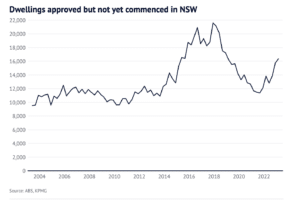
KPMG’s analysis found almost 16,400 dwellings in New South Wales were approved but not yet commenced by the end of March, up from 13,800 at the same time last year.

As the graph below shows, the last time there was such a vast backlog of paused construction projects with approvals was in 2019. However, back then, developers in Sydney were hitting the brakes due to a historically high vacancy rate of 3.5%. 

By contrast, Sydney’s vacancy rate was just 1.1% in May, according to Domain. 


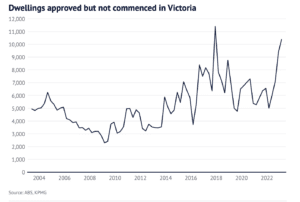
Similarly, in Victoria, almost 10,500 dwellings were approved but construction had not yet commenced by the end of March, the highest number of stalled projects since December 2017.

KPMG urban economist, Terry Rawnsley, said around three-quarters of the not-yet-commenced dwellings in New South Wales and Victoria were slated to be apartments or townhouses.

“Both Victoria and New South Wales have increased demand for new dwelling approvals, but dwellings are far from materialising, due to significantly higher input costs,” he said. 

Managing cost overruns in development finance 

There’s no doubt skyrocketing prices, as well as material and labour shortages, are making the development environment particularly challenging. 

So you may be wondering if there’s anything you can do to avoid costs spiralling out of control on your project.

Well, in many cases, prevention is better than cure. 

That means: 

  • Estimating costs accurately: Don’t be tempted to use a one-size-fits-all approach. Rather, do your due diligence in the planning phase to create a realistic budget.
  • Planning for surprises: Identify and assess risks that could lead to cost overruns, and develop a risk management plan with contingency funds.
  • Clearly defining project scope: Changes in project scope are a common cause of cost overruns. So use a robust change order control process that includes assessing the impact of proposed changes on cost, schedule, and quality before approving them. 
  • Tracking your budget: Monitor your project progress and costs regularly. This includes comparing actual costs against the budget, tracking project milestones, and promptly addressing any deviations.
  • Contingency planning: Allocating contingency funds in the project budget to account for unforeseen expenses. The contingency amount should be based on a realistic assessment of potential risks and should be managed carefully throughout the project.

Crowd Property Capital is a property development finance specialist. We help property developers overcome their funding challenges by sourcing loans for land, construction and residual stock. Contact us at info@crowdpropertycapital.com.au or fill in this form.


A tale of 3 cities – Sydneys winners and losers in the GSC’s visionary plans

cpc-logo


October 2017  Article by Build Sydney


This week the government announced a 3 city plan. These 3 cities will be fully functioning cities connected by major transport & infrastructure projects by the year 2056. These cities include:

  • The Harbour City (focused around the Sydney CBD, North Sydney, Chatswood, Macquarie Park, Sydney Airport & Port Botany)
  • The Central City (Focused around the Parramatta CBD, Sydney Olympic Park, Norwest, Rhodes & the Parramatta River)
  • The Western City (Focused around the Badgerys Creek Aerotropolis future development, Liverpool, Penrith, Campbelltown, Narellan & Leppington)

As outlined by the Greater Sydney Commissions map of a future Sydney, It clearly shows which areas are going to directly benefit via mass-transit projects, highways & their given timeline for the project. While some areas such as those around Badgerys Creek are going to benefit greatly, areas with current social-economic disadvantages & getting the short end of the stick, particularly around the Fairfield, Liverpool & Blacktown Local Government Areas which have some of the highest disadvantaged suburbs in NSW.

While it could be argued that having a Western City built to the west of them would benefit their job situation, it is quite clear that the airport itself is further away from the Sydney CBD both in distance & in the time taken to get there by current public transport.

To the contrary, the future looks great for the Greater Parramatta region which is set to benefit from a variety of infrastructure which will cement its place as Sydney 2nd CBD & facilitating the plan clearly shows Parramatta becoming the next central with the amount of public transport which will come through the suburb. Already NSW’s 4th business station, if trends continue then it should be well on its way to becoming the 2nd busiest by the time the Greater Sydney Commission’s plan is realized in 2056.

Future links to cement Parramatta as the New Central Include:

  • The Parramatta Light Rail Stage 1 & Stage 2
  • Westconnex
  • Sydney Metro West
  • A Future mass-transit link to Badgerys Creek
  • A future mass-transit link to Kogarah via Bankstown
  • A future mass-transit link to Epping
  • A visionary mass-transit link to Norwest
  • A Future Ring-road around the Parramatta region which consists of the Parramatta CBD, Westmead, Rydalmere, Camilia, Rosehill & North Parramatta.

The Harbour city which consists of the Sydney CBD and surrounding area’s looks to further cement its place as the financial capital of Australia with a focus on finance, fin-tech & innovation. It looks to strengthen in the global economic corridor which runs from Sydney airport & Port Botany through Green Square then onto the innovations hubs of Redfern & the Bays precinct then importantly into the Sydney CBD which from there the corridor continues over the harbour to North Sydney, St Leonards, Chatswood & finally to Macquarie Park.

A significant amount of density is set to rise around Mascot & Green Square, as well as around Maroubra & Eastgardens. There will also be a line of major infrastructure projects which include:

  • A future mass transit link from the Sydney CBD through the Eastern Suburbs onto La Perouse. This plan should facilitate higher densities within the Eastern Suburbs.
  • The Beaches Link motorway
  • The Western Harbour Tunnel
  • The Sydney CBD to Eastern Suburbs Light Rail
  • A Future Bays Precinct to the Sydney CBD Light Rail

While this plan is solid, it will clearly lead to a disadvantage for people who live in the Western City & commute to the Harbour City and vice-versa. In a perfect world the “30-minute city” as it has been dubbed would be just that but in a world of high property prices pushing commuters further out away from the major CBD & a majority of the high-paying technical jobs being located in the Sydney CBD, it could actually make the situation worse, however, its greater to see planning & transport come together for the first time in NSW to promote a proper 40-year vision for Sydney.

In order for a plan like this to work, it must be stressed that infrastructure & transport be put in before people & businesses move in. An example of the chaos this can cause is Wentworth Point being the most-dense suburb in NSW yet having one road (Hill Road) in & out of the suburb where only recently was the Bennelong Bridge opened, however, the point stands that infrastructure services & transport must be put in before any major developments & population spikes occur.

For a summary of the report click here 


Home Values Continue to Rise in Australia CoreLogic Jan 2017

cpc-favicon


January 2017


The hedonic home value index released by CoreLogic (Australia’s leading property data and analytic company) has been released for January 2017, in summary:

  • Best performing capital city: Hobart +5.8%
  • Weakest performing capital city: Canberra +0.1%
  • Highest rental yields: Hobart & Canberra houses with gross rental yield of 5.0% and Hobart Units at 5.8%
  • Lowest rental yields: Melbourne houses with gross rental yield of 2.7% and Darwin units at 3.4%
  • Most expensive city: Sydney with a median dwelling price of $850,000
  • Most affordable city: Hobart with a median dwelling price of $366,000

For the full report on the above statistics click here