When presales fall short, a residual stock loan could be the answer


Written by David Lovato – CPC Development Lending Solutions
June 2026
Many developers started projects in 2025 expecting sales to catch up during construction. Instead, some are approaching completion with fewer presales than anticipated and a construction loan that still needs to be repaid.
If this sounds familiar, a residual stock loan could be an option for you.
Why have presales slowed?
The off-the-plan market is under pressure from several directions at once. The Reserve Bank of Australia (RBA) has raised the cash rate three times in 2026, taking it to 4.35%, undoing all three of the cuts delivered in 2025. Reduced borrowing capacity means fewer buyers can qualify for finance at the prices developers need to achieve, shrinking the pool of potential purchasers considerably.
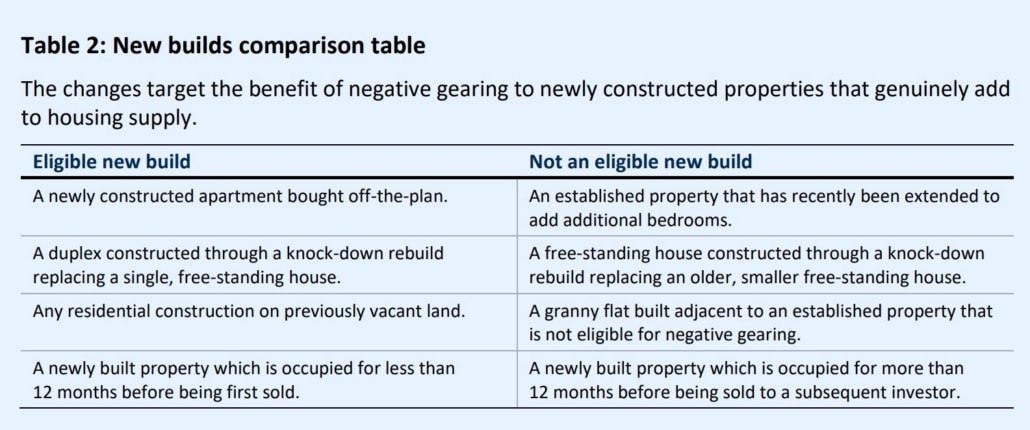
Buyer sentiment has been affected by uncertainty around interest rates, the cost of living and the Federal Budget’s negative gearing and capital gains tax (CGT) changes. While the reforms aren’t yet official – and even if they do become so, they won’t take effect until 1 July 2027 – some prospective investors are taking a cautious approach while they assess the implications for their own position. According to the latest Westpac-Melbourne Institute Consumer Sentiment Index, the “time to buy a dwelling” index dropped 13% in June 2026 compared to the same time in 2025.
Longer build timeframes add another layer of hesitancy. A new report from the Committee for Economic Development of Australia (CEDA), produced in partnership with Urbis, found that build times have increased by 40% since the pandemic, and construction costs have surged by 88% over the last 10 years. As a result, buyers who commit to off-the-plan are locking in a purchase price for a property they may not settle for a year or more, in a market where the outlook has become harder to read.
There is also a dynamic specific to developers themselves. Many could generate more sales by discounting, but doing so risks resetting the price benchmark for the entire project. Some are consciously choosing to protect value rather than chase volume – a sound strategy, but one that slows sales in the short term. The result for projects completing right now is fewer locked-in sales than anticipated and, in some cases, presale numbers that fall short of what is needed to repay the construction lender.
What is a residual stock loan?
A residual stock loan is designed specifically for this situation. It allows a developer to refinance out of their construction loan at or near practical completion, replacing it with a new facility secured against the unsold dwellings.
Rather than being forced to discount to generate quick sales and meet a construction loan maturity date, the developer transitions to a lender whose facility is structured around a sell-down period. This gives your sales team time to properly nurture qualified buyers through the decision-making process, hold prices at the levels the project’s feasibility requires and avoid the pressure to discount that comes when a construction loan maturity is bearing down.
The key benefits of a residual stock loan
The most immediate benefit is time. A residual stock facility extends your timeline, removing the pressure of a looming construction loan maturity while your sales campaign is still gaining traction.
It can also reduce holding costs. Residual stock facilities are typically structured differently from construction loans, and refinancing at the right time can lower the cost of carrying unsold stock through to settlement.
There is also the potential for early equity release. Some residual stock lenders will agree to a split of sale proceeds as individual settlements occur, meaning you can begin recovering equity from completed sales rather than waiting until the entire facility is repaid. For developers with capital committed across multiple projects, this can help with cash flow.
What to consider before choosing a residual stock loan
Residual stock facilities are not without trade-offs. Interest rates are typically lower than a construction loan as there is no line fee or progressive drawdown, so there is less ongoing admin for the lenders. The loan will have a fixed repayment date but no minimum term, so you don’t get penalised if you repay the loan early.
Lenders will also assess the quality and location of the unsold stock, the strength of the sales pipeline and, often, the experience of the appointed sales agent before agreeing to terms. A project with limited buyer interest or in a softening market may find residual stock options harder to access, or available only on less favourable terms.
It is also worth noting that a residual stock loan is a bridge, not a solution in itself. If the underlying demand for the project is genuinely weak, extending the sell-down period will delay rather than resolve the problem. The facility works well when the issue is timing and market conditions, not fundamental project viability.
Timing matters
Many developers wait until practical completion to investigate residual stock finance, but by then, your options could be more limited. As soon as it becomes clear that sales are tracking below expectations, you should consider engaging a specialised development finance broker about your options.
Starting the conversation early gives you more flexibility, more lender options and more time to structure an orderly transition out of the construction facility if required.
At CPC Lending Solutions, we help developers assess residual stock options before settlement pressure builds, giving you more time to achieve the right sales outcomes rather than being forced into decisions by looming loan deadlines. To find out more about how CPC approaches development finance, download the CPC Lending Solutions Development Lending Guide.
If you would like to discuss your specific situation, contact David Lovato at dlovato@crowdpropertycapital.com.au or submit an enquiry.