NSW expands its Housing Pattern Book to include mid-rise apartments


Written by David Lovato – CPC Development Lending Solutions
December 2025
The NSW Government has released the next major stage of its Housing Pattern Book: a collection of nine architect-designed mid-rise apartment patterns aimed at speeding up approvals and lowering upfront costs for developers. The new designs – ranging from three to six storeys – build on the eight low-rise “missing middle” patterns released earlier in 2025.
For developers, builders and mum-and-dad investors, the move to standardised mid-rise designs points to a clearer, more predictable pathway for medium-density projects. By reducing design uncertainty and simplifying early assessment, it has the potential to shorten timelines and lower holding risks, which in turn shapes how development finance is structured and assessed.
A broader range of ready-to-build designs
The mid-rise release includes:
- Four patterns for small lots
- Three patterns for large lots
- Two corner-lot designs
All have been produced by leading architectural practices across Australia and New Zealand. The designs are contemporary, energy-efficient and meet the Australian Building Codes Board’s Liveable Housing Design Standard. With options for solar access, cross-ventilation, adaptable layouts and various material palettes, the patterns maintain architectural quality while being practical to build at scale.
Faster, simpler approvals for mid-rise projects
Unlike the low-rise patterns, which can use a complying development certificate (CDC), the mid-rise designs still require a development application. But the government has implemented important measures to streamline the process.
Because the designs are pre-endorsed by the NSW Government Architect, councils have been instructed to:
- Remove design review panel requirements
- Halve average assessment times
- Assess patterns under officer delegation, avoiding Local Planning Panel delays
In early 2026, new planning laws will introduce an even faster “targeted assessment pathway” specifically prioritising mid-rise pattern book designs.
For developers, this could provide more certainty. The hope is that timeframes become clearer, risk around design modifications is reduced, and feasibility modelling becomes easier to forecast.
Lower upfront design costs – with limits
The pricing for the patterns is heavily subsidised for the first six months:
- Small and corner lot designs: $1,500 per lot (normally $15,000)
- Large lot designs: $2,500 per lot (normally $25,000)
While not as cheap as the introductory $1 pricing for the original low-rise patterns (available until January 2026), these fees are still far below the cost of bespoke architectural design. For developers handling multiple lots, the savings can be meaningful.
However, as with the low-rise patterns, these plans are not turnkey solutions. Developers will still need:
- Site-specific engineering
- Planning documentation
- A registered architect (required for all mid-rise projects)
- Quantity surveying
- Construction certificates
- Adjustments for site slope, bushfire, soil or flood conditions
The patterns reduce design complexity and approval risk, but they do not eliminate the need for full due diligence.
What the expanded Pattern Book means for development finance
For lenders, the mid-rise patterns help address one of the biggest barriers to financing small-to-medium residential developments: uncertainty.
Standardised, pre-endorsed designs will make it easier for a lender to assess:
- Buildability and construction risk
- Likely build costs (within a tighter band)
- Approval timelines
- End valuations, thanks to clearer comparables
With less ambiguity, developers – particularly small builders or first-time apartment developers – can present a stronger feasibility and secure funding with fewer unknowns. Faster approvals may also reduce holding costs, improving project viability.
However, lenders will still closely assess contingency allowances, builder experience, equity position, presales (where required) and cost escalation risks.
Why developers still need a specialist broker like CPC
The pattern book removes friction, but it does not guarantee funding. Even with streamlined designs and faster approvals, development finance remains complex. Lenders interpret the pattern book differently, credit appetites shift frequently, and individual project variables still influence borrowing capacity, structure and pricing.
A specialist broker like CPC Lending Solutions understands how lenders are assessing pattern book projects right now, which lenders are backing mid-rise schemes and what parameters developers must meet to secure competitive terms. We can help structure funding that aligns with realistic timelines, cash flow needs and lender expectations – ensuring that the benefits of the pattern book actually translate into a deliverable, financeable project.
Before you begin planning finance for your next mid-rise development, you can also download CPC Lending Solution’s Development Lending Guide for a clear breakdown of lending criteria, funding structures and market insights.
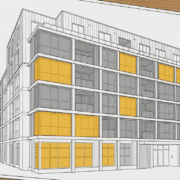
Headline image: Small Lot Apartment 04 by Neeson Murcutt Neille, one of the nine approved designs. Credit: planning.nsw.gov.au
CPC Lending Solutions helps developers secure finance for projects using the NSW Housing Pattern Book. If you’re planning a mid-rise or missing-middle development, contact CPC at info@crowdpropertycapital.com.au or submit an enquiry to structure your funding with confidence.